Last updated: July 25, 2026
Quick Answer: If you’ve been arrested for DUI in Skokie, your case will be heard at the Skokie Courthouse located at 5600 Old Orchard Road. Expect an arraignment, potential license suspension, and a multi-step court process that can span months. The decisions made in the first 48 hours, and at your first court date, can define the entire outcome of your case.
Key Takeaways
- DUI cases from Skokie and the surrounding North Shore area are processed at the Skokie Courthouse, part of the Cook County court system.
- Your first court appearance is typically an arraignment where you enter a plea, not a trial.
- Illinois imposes an automatic statutory summary suspension of your driver’s license after a DUI arrest, often starting 46 days after the arrest date.
- A first-offense DUI in Illinois is a Class A misdemeanor, but aggravating factors can elevate it to a felony.
- Probation is available for many first-time DUI offenders in place of jail time.
- A DUI can be challenged and, in some cases, dismissed, but only with a proven legal strategy built on facts.
- Representing yourself against a DUI charge is a serious risk; local experience matters enormously in Cook County courts.
- A hardship (Monitoring Device Driving Permit) may be available while your case is pending.
- Second and third DUI offenses carry dramatically harsher penalties under Illinois law.
- Breathalyzer results are not infallible, calibration errors, medical conditions, and improper administration can all be challenged.
What Happens at Your First DUI Court Appearance in Skokie
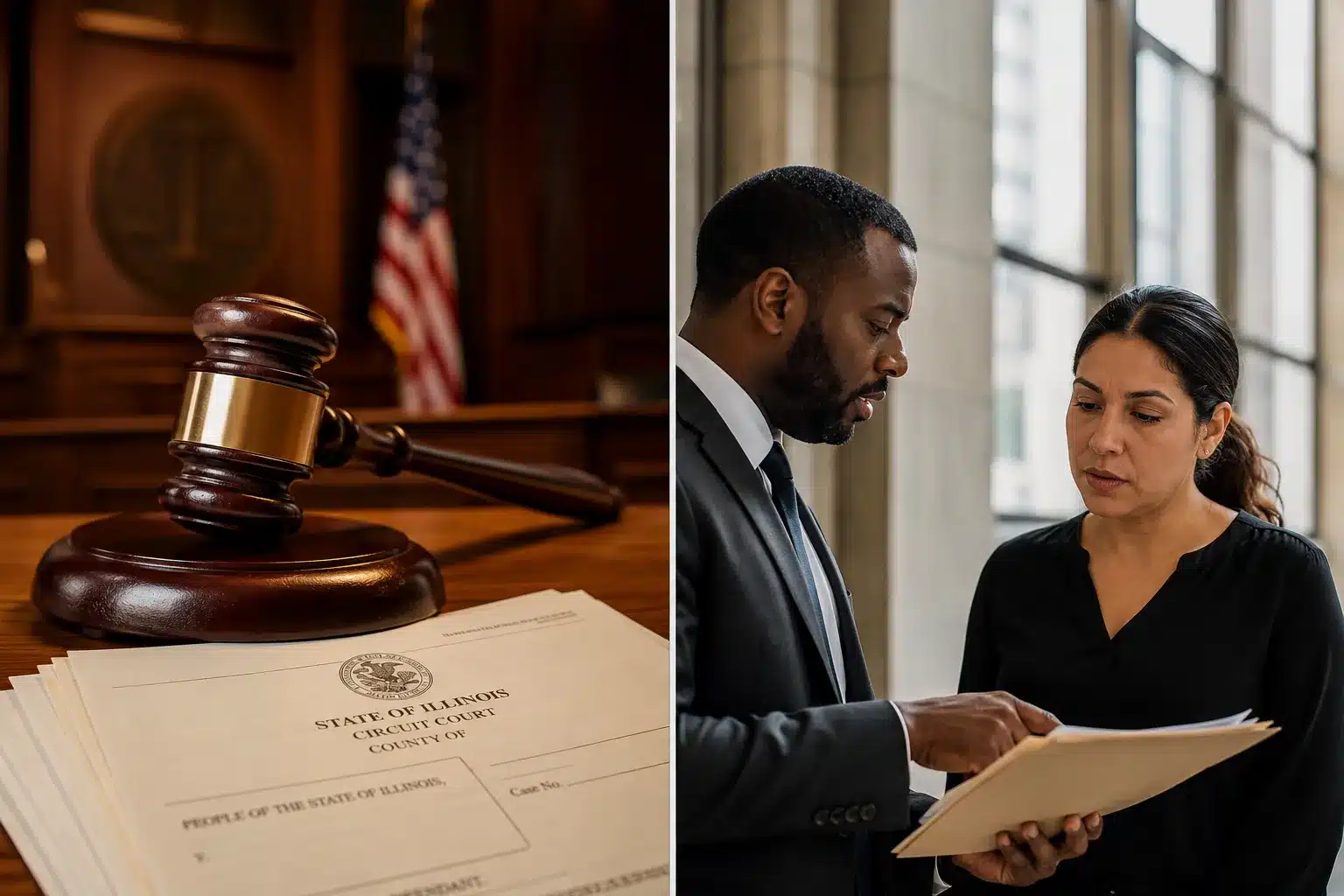
Your first court appearance after a DUI arrest in Skokie is called an arraignment. At this hearing, the judge formally reads the charges against you, and you enter a plea of guilty, not guilty, or no contest. In most cases, a skilled attorney will enter a not guilty plea to preserve your options and give the defense time to build a strategy. [1]
Here’s what to expect at that first appearance:
- Arrival: The Skokie Courthouse is at 5600 Old Orchard Road, Skokie, IL 60077. Arrive early. Security screening is required at the entrance, no weapons, no prohibited items. [4]
- Check in: Find the correct courtroom number from the court call sheet posted in the lobby or provided on your summons.
- The hearing itself: It typically lasts only a few minutes. The judge will confirm your identity, read the charges, and ask for your plea.
- Bond conditions: If bond was set after your arrest, the judge may review or modify conditions at this stage. For a deeper look at how Cook County handles post-arrest proceedings, see this guide on what happens after a DUI arrest in Chicago.
- Zoom court option: Many first DUI appearances in Skokie now occur via Zoom. Your attorney can often appear on your behalf for the initial hearing, meaning you may not need to take time off work for every early court date. [7]
Common mistake: Showing up without an attorney at your arraignment. Even if you plan to hire a lawyer, walk in with one. The arraignment sets the tone for everything that follows.
What Should I Bring to My DUI Court Date in Skokie
Bring your written notice to appear or bond slip, a valid photo ID, and any paperwork given to you at the time of arrest. If you’ve already retained an attorney, they will guide you on what else is needed. [5]
Practical checklist for your court date:
- Written court summons or bond conditions slip
- Government-issued photo ID
- Contact information for your attorney
- Any documentation related to your vehicle, insurance, or prior driving record (if requested)
- Appropriate, professional clothing, courts notice appearance
Do NOT bring: cell phones set to ring, food or drinks, or anyone who might create a distraction in the courtroom.
What Are Typical DUI Penalties in Skokie
Illinois DUI penalties are set by state law and apply uniformly, including at the Skokie Courthouse. A first-offense DUI is a Class A misdemeanor, punishable by up to 364 days in jail and fines up to $2,500. However, the actual consequences go well beyond the courtroom. [3]
| Offense Level | Jail Time | Fine (max) | License Revocation |
|---|---|---|---|
| 1st DUI (misdemeanor) | Up to 364 days | $2,500 | Minimum 1 year |
| 2nd DUI (misdemeanor) | Mandatory 5 days or 240 hrs community service | $2,500 | Minimum 5 years |
| 3rd DUI (Class 2 felony) | 3-7 years | $25,000 | 10 years |
| DUI with injury (aggravated) | Up to 12 years | $25,000 | Varies |
For a complete breakdown, see this Illinois DUI penalties guide.
Additional consequences can include mandatory alcohol evaluation, treatment programs, installation of a Breath Alcohol Ignition Interlock Device (BAIID), and a permanent mark on your driving record.
Can You Get a DUI Dismissed in Skokie
Yes, a DUI can be dismissed in Skokie, but it requires an aggressive, fact-based defense strategy. Dismissals happen when the evidence is insufficient, constitutional rights were violated during the stop or arrest, or the prosecution cannot prove every element of the charge beyond a reasonable doubt. [2]
Common grounds for challenging or dismissing a DUI in Cook County:
- Unlawful traffic stop: If the officer lacked reasonable suspicion to pull you over, all evidence gathered afterward may be suppressed.
- Improper field sobriety testing: Officers must follow standardized procedures. Deviations matter. Learn more about field sobriety test accuracy.
- Breathalyzer errors: Faulty calibration, improper administration, or medical conditions can produce false readings.
- Chain of custody issues: Blood test samples must be properly handled and documented.
- Miranda violations: Statements made without proper advisements may be excluded.
A dismissal is not guaranteed, but it is a real outcome when the right defense is built from the start.
How Does the Breathalyzer Test Work and Can It Be Wrong
A breathalyzer estimates blood alcohol concentration (BAC) by measuring alcohol in your exhaled breath and applying a mathematical conversion. The device assumes a fixed breath-to-blood ratio of 2,100:1, but that ratio varies person to person, which creates a built-in margin of error.
Breathalyzer results can be wrong for several reasons:
- Calibration failures: Devices must be regularly calibrated and maintained. Records of maintenance are discoverable in court.
- Mouth alcohol contamination: Burping, vomiting, or using certain mouthwashes shortly before the test can inflate readings.
- Medical conditions: Acid reflux, diabetes, and certain diets (such as ketogenic) can produce compounds that mimic alcohol on the test.
- Improper observation period: Illinois requires a 20-minute observation period before administering the test. Skipping or shortening this step can invalidate the result.
An experienced DUI defense attorney will request all calibration logs and officer training records as part of the discovery process.
Do I Need a Lawyer for a DUI in Skokie or Can I Represent Myself
Representing yourself in a DUI case is legal, but it is one of the most common and costly mistakes defendants make. DUI law in Illinois is complex, procedurally demanding, and the consequences of a conviction are long-lasting.
A local attorney with proven experience at the Skokie Courthouse brings:
- Knowledge of how specific judges and prosecutors approach DUI cases
- The ability to file suppression motions, negotiate plea agreements, and challenge evidence
- Access to expert witnesses for breathalyzer and field sobriety challenges
- Immediate action on the statutory summary suspension, a 28-day window to request a hearing that most self-represented defendants miss
For context on what a defense attorney actually does in these situations, see what a criminal defense attorney in Chicago really does.
How Much Does a DUI Lawyer Cost in Skokie, Illinois
DUI attorney fees in the Skokie and Cook County area vary based on case complexity, the attorney’s experience, and whether the case goes to trial. General ranges (estimates only, based on common market rates in the Chicago metro area):
- Flat fee for a first-offense misdemeanor DUI: Typically $1,500 to $5,000
- Felony DUI or cases involving accidents/injury: $5,000 to $15,000 or more
- Trial representation: Can exceed $20,000 depending on complexity
Many attorneys offer free initial consultations. When evaluating cost, consider the alternative: a DUI conviction can cost far more in fines, insurance rate increases, lost employment opportunities, and mandatory programs. Local experience is not a luxury, it’s part of the strategy.
How Long Does a DUI Case Take at the Skokie Courthouse
A straightforward first-offense DUI case in Skokie typically takes between 6 and 12 months from arrest to resolution. Cases involving accidents, injuries, prior offenses, or contested evidence can take 18 months or longer. [6]
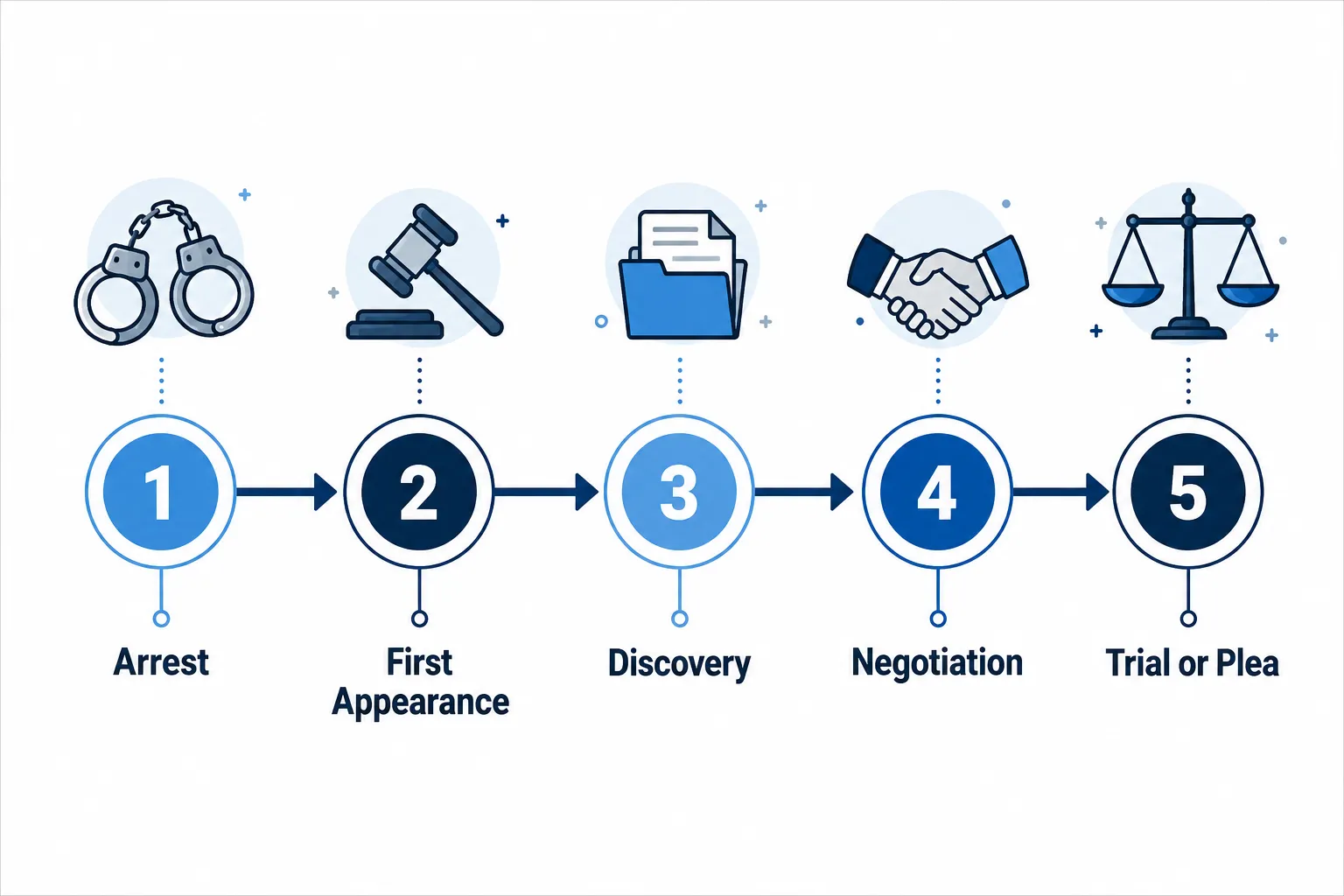
The general timeline looks like this:
- Arrest and processing (Day 1)
- First court appearance / arraignment (within days to a few weeks)
- Discovery phase (police reports, video, breathalyzer records obtained), 1 to 3 months
- Pre-trial motions (suppression hearings, if applicable), adds 1 to 3 months
- Plea negotiations or trial preparation, ongoing
- Resolution (plea agreement, dismissal, or trial verdict)
Continuances are common in Cook County courts. Patience and consistent communication with your attorney are essential throughout this process.
Can You Get Probation Instead of Jail Time for DUI in Skokie
Yes. For first-time DUI offenders in Illinois, probation is a common outcome and is often available in place of jail time. Illinois law allows for a sentence of conditional discharge or court supervision for eligible first offenders, which avoids a formal conviction on your record if all conditions are met. [3]
Conditions of DUI probation typically include:
- Alcohol evaluation and completion of any recommended treatment
- Random drug and alcohol testing
- Installation of a BAIID on your vehicle
- Payment of fines and court costs
- No new criminal charges during the probation period
Important: Court supervision (the most favorable outcome for first offenders) is only available once in a lifetime for DUI in Illinois. If you’ve already received supervision for a prior DUI, you will face a formal conviction on any subsequent offense.
What Happens If This Is Your Second or Third DUI in Illinois
A second DUI in Illinois is still a misdemeanor but carries mandatory minimum penalties, including either 5 days in jail or 240 hours of community service. A third DUI is charged as a Class 2 felony, with potential prison time of 3 to 7 years and a 10-year license revocation. [3]
The stakes escalate sharply with each offense:
- Second offense: Mandatory minimum jail or community service, 5-year license revocation, BAIID required for reinstatement
- Third offense (felony): Prison time, $25,000 fine, permanent revocation possible
- Aggravated DUI: Any DUI involving a child passenger, serious injury, death, or driving on a revoked license can be charged as an aggravated DUI, a Class 4 felony or higher. See more on aggravated DUI charges.
If this is not your first offense, immediate, aggressive legal representation is not optional, it is essential.
What’s the Difference Between DUI and DWAI in Illinois
Illinois does not use the DWAI (Driving While Ability Impaired) classification that some other states use. In Illinois, the charge is DUI, Driving Under the Influence, and it applies when a driver has a BAC of 0.08% or higher, or when any amount of alcohol or drugs impairs their ability to drive safely. [3]
Key Illinois-specific distinctions:
- Per se DUI: BAC of 0.08% or above, no additional proof of impairment needed
- Impairment-based DUI: Even with a BAC below 0.08%, a driver can be charged if their driving is impaired by alcohol, cannabis, or any other substance
- Zero tolerance for under-21 drivers: Any detectable amount of alcohol (0.00% BAC threshold) can result in a DUI charge for drivers under 21
- Cannabis DUI: Illinois law sets a limit of 5 nanograms of THC per milliliter of blood for cannabis impairment
Is There a Hardship License Available While Your Case Is Pending in Skokie
Yes. Illinois offers a Monitoring Device Driving Permit (MDDP) for first-time DUI offenders during the statutory summary suspension period. This permit allows you to drive to work, school, and other essential destinations, but only in a vehicle equipped with a BAIID. [3]
Key facts about the MDDP:
- Available to first-time DUI offenders only
- Requires installation of a BAIID at your own expense (typically $70,$150 per month for the device)
- You must apply within the first 46 days after your arrest to avoid a gap in driving privileges
- Not available if you refused the breathalyzer test AND have a prior DUI on record
For those who are not eligible for the MDDP, a formal hearing before the Illinois Secretary of State may be required for reinstatement. See more on the formal hearing process for driver’s license reinstatement.
What Are Common Mistakes People Make in DUI Cases
The most damaging mistakes in DUI cases happen in the first 24 to 72 hours, before most people have even spoken to an attorney.
Avoid these errors:
- Talking to police without an attorney present: Anything said during or after the stop can be used against you. Politely invoke your right to counsel and stop talking.
- Missing the 28-day deadline: You have 28 days from the date of your notice of statutory summary suspension to request a hearing to contest the license suspension. Miss it, and you lose the right to challenge it.
- Assuming the breathalyzer is accurate: Challenge everything. Request calibration records and officer training logs immediately.
- Posting on social media: Statements made online can be used as evidence. Stay silent on all platforms.
- Hiring a non-local attorney: An attorney unfamiliar with the Skokie Courthouse, its judges, and the local prosecutors will be at a serious disadvantage. Local experience produces better results.
- Waiting too long to hire a lawyer: Evidence disappears. Witnesses’ memories fade. Video footage gets overwritten. Act immediately.
For a broader look at protecting yourself after any arrest, see what to do after an arrest in Cook County.
FAQ: Arrested for DUI in Skokie, What to Expect at the Skokie Courthouse
Q: Where exactly is the Skokie Courthouse? A: The Skokie Courthouse is located at 5600 Old Orchard Road, Skokie, IL 60077. It handles DUI cases from Skokie and several surrounding North Shore communities within Cook County. [1]
Q: Will I have to go to court in person for every hearing? A: Not necessarily. Many early DUI hearings in Skokie are now conducted via Zoom. Your attorney can often appear on your behalf for routine continuances and early appearances. [7]
Q: What happens to my driver’s license right after a DUI arrest in Illinois? A: Your license is subject to an automatic statutory summary suspension that takes effect 46 days after your arrest. You have 28 days from the notice date to request a hearing to contest it. [3]
Q: Can I refuse a breathalyzer test in Illinois? A: Yes, but refusal triggers an automatic 12-month statutory summary suspension for a first offense (vs. 6 months if you took the test and failed). Refusal can also be used against you in court as evidence of consciousness of guilt.
Q: What is court supervision and how does it help? A: Court supervision is a sentence that, if completed successfully, does not result in a formal conviction on your record. It is available once in a lifetime for DUI in Illinois and is typically the best outcome for eligible first-time offenders. [3]
Q: How many times can I get court supervision for a DUI in Illinois? A: Only once. If you received court supervision for a prior DUI, any subsequent DUI will result in a formal conviction, regardless of the circumstances.
Q: Does a DUI stay on my record forever in Illinois? A: A DUI conviction in Illinois cannot be expunged or sealed. It remains on your driving record permanently. This is one of the strongest reasons to fight the charge aggressively from the start.
Q: What if I was arrested for DUI but my BAC was below 0.08%? A: You can still be charged. Illinois law allows prosecution for DUI based on impairment even without a BAC at or above the legal limit. The prosecution must then prove impairment through other evidence, such as officer observations and field sobriety test results.
Q: Can cannabis use lead to a DUI in Illinois? A: Yes. Illinois law sets a limit of 5 nanograms of THC per milliliter of blood. Driving above that limit, or while impaired by cannabis regardless of the measured amount, can result in a DUI charge.
Q: How do I find a DUI lawyer in Skokie? A: Look for an attorney with specific Cook County and Skokie Courthouse experience, a track record in DUI defense, and a willingness to explain your options clearly. See the Skokie criminal defense lawyer page for local representation.
Conclusion: Take Control of Your DUI Defense Now
Being arrested for DUI in Skokie is serious, but it is not the end of the road. What happens next depends almost entirely on the strategy you build and the speed with which you act.
The Skokie Courthouse processes hundreds of DUI cases each year. Prosecutors are experienced. Judges have seen every excuse. What cuts through is a prepared, aggressive defense backed by local knowledge and proven results.
Here are your immediate next steps:
- Do not make any statements to police, prosecutors, or anyone else about your case.
- Hire a DUI defense attorney immediately, before your first court date, not after.
- Act on the 28-day deadline to contest your statutory summary suspension.
- Gather everything: your arrest paperwork, any receipts or records from the night in question, and witness contact information.
- Ask about the MDDP so you can continue driving while your case is pending.
The difference between a dismissed case and a permanent conviction often comes down to one decision: who you call in the first 24 hours. Protect your record, your license, and your future. Fight this charge with the full force of a defense built for results.