

Last updated: July 25, 2026
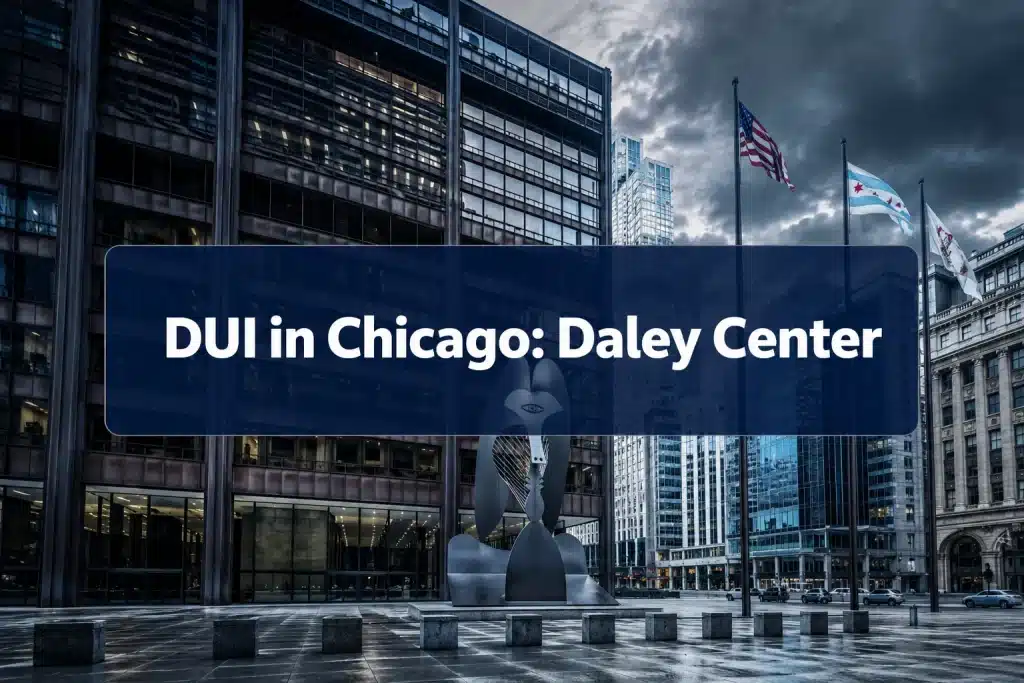
Quick Answer: A DUI arrest in Chicago triggers two separate legal battles, a criminal case in Cook County court and an administrative fight over your driver’s license. Most DUI cases are heard at the Richard J. Daley Center, 50 W. Washington Street. The process moves through arraignment, pretrial hearings, and potentially a bench or jury trial. Without an aggressive defense strategy, a first-time DUI can cost you your license for a year, thousands in fines, and a permanent criminal record.
Key Takeaways
- A DUI arrest in Chicago starts a criminal case AND a separate Secretary of State license hearing, both require immediate action.
- Your first court appearance at the Daley Center is the arraignment, where you enter a plea.
- Illinois has a Statutory Summary Suspension law: refusing a breathalyzer triggers an automatic 12-month license suspension for first-time offenders.
- A first-time DUI in Illinois is a Class A misdemeanor, punishable by up to 364 days in jail and fines up to $2,500, but real-world penalties vary widely.
- Illinois does not have a separate DWAI charge, DUI is the single standard, with a BAC threshold of 0.08%.
- A DUI can be dismissed or reduced, but it requires a proven legal strategy and local experience in Cook County courts.
- Hiring a DUI attorney in Chicago typically costs between $1,500 and $10,000+ depending on case complexity.
- You have only 46 days from arrest to request a hearing to contest your license suspension.
What Happens When You Get Arrested for DUI in Chicago
Being arrested for DUI in Chicago sets off a fast-moving legal clock. Police will process you, likely hold you until sober, and issue a Notice of Summary Suspension, the document that starts the countdown on your driving privileges.
Here is what to expect step by step:
- Traffic stop and field sobriety tests, Officers may ask you to perform standardized field sobriety tests. Understanding field sobriety test clues can matter later in court.
- Chemical test request, Police will ask for a breath, blood, or urine test.
- Arrest and booking, You are transported to a Chicago Police District station for processing.
- Notice of Summary Suspension, This document is handed to you at arrest. It triggers an automatic license suspension unless you act within 46 days.
- Release, Under Cook County’s updated pretrial system, most first-time DUI defendants are released without cash bail. See how Cook County bond court changes affect your release.
- Court date issued, You receive a date to appear at the Daley Center.
For a deeper breakdown of what follows an arrest, read what happens after a DUI arrest in Chicago.

Can You Refuse a Breathalyzer Test in Illinois, and Should You?
Yes, you can legally refuse a breathalyzer in Illinois, but refusal carries automatic penalties under the state’s implied consent law. For a first-time offender, refusal triggers a 12-month Statutory Summary Suspension. If you take the test and fail (BAC of 0.08% or higher), the suspension is 6 months.
The tradeoff:
| Scenario | First Offense Suspension |
|---|---|
| Failed breath test (BAC 0.08%+) | 6 months |
| Refused breath test | 12 months |
| Failed test, prior DUI within 5 years | 12 months |
| Refused test, prior DUI within 5 years | 3 years |
Refusal eliminates one piece of evidence, your BAC reading, but creates a longer suspension and can be used against you in court. An attorney with local experience can help you weigh this decision’s impact on your specific case.
What Are the Penalties for a First-Time DUI in Chicago
A first-time DUI in Illinois is a Class A misdemeanor. The statutory penalties include:
- Up to 364 days in jail
- Fines up to $2,500 (plus court costs that can push the total much higher)
- Minimum 1-year driver’s license revocation
- Mandatory drug and alcohol evaluation
- Possible installation of a Breath Alcohol Ignition Interlock Device (BAIID)
In practice, first-time offenders rarely receive jail time if no aggravating factors exist. However, aggravating factors, such as a BAC of 0.16% or higher, a child passenger, or an accident, can escalate charges significantly. Learn more about the consequences of a DUI arrest in Illinois.
Common mistake: Assuming a first offense means no serious consequences. The license revocation alone can cost more in lost income and transportation than any fine.
What Is the Difference Between DUI and DWAI in Chicago
Illinois does not have a DWAI (Driving While Ability Impaired) charge. Unlike some states that use DWAI as a lesser offense for lower BAC levels, Illinois uses a single DUI standard. You can be charged with DUI if your BAC is 0.08% or higher, or if any amount of alcohol or drugs impairs your ability to drive safely, even below 0.08%.
This matters because there is no plea-down to a lesser driving impairment charge in Illinois the way there is in states like New York or Colorado. Your defense strategy must focus on dismissal, suppression of evidence, or negotiating a different outcome entirely.
The Daley Center DUI Court Process: What to Expect at Your First Appearance
Arrested for DUI in Chicago and wondering what the Daley Center experience actually looks like? Your first court date is the arraignment. This is not a trial, it is a formal hearing where the charges are read and you enter a plea.
What to expect at arraignment:
- Arrive early. Security lines at the Daley Center can be long.
- Bring your court notice, a valid ID, and any paperwork from your arrest.
- Your attorney (if retained) will appear with you or on your behalf.
- You will enter a plea of not guilty in nearly all cases, this preserves your options.
- The judge may set conditions of release or schedule the next hearing.
After arraignment, the case moves through pretrial conferences, where your attorney negotiates with the prosecutor and reviews evidence. If no plea agreement is reached, the case proceeds to a bench or jury trial.
For more on navigating Cook County courthouse procedures, see navigating traffic tickets at the Daley Center.

How Long Does a DUI Case Take in Chicago
Most DUI cases in Cook County take between 6 months and 18 months to resolve. Simple first-offense cases with no trial may conclude in 6 to 9 months. Cases involving accidents, injuries, or contested evidence can run 12 to 24 months.
Factors that affect timeline:
- Whether you request a jury trial (longer) or bench trial (faster)
- Court backlog at the Daley Center
- Complexity of the evidence (dashcam footage, blood test results, witness testimony)
- Whether the prosecution offers a plea early
Edge case: If police dashcam or body camera footage exists, your attorney may file motions to obtain and review it. Delays in discovery can extend the timeline but may also reveal critical evidence. See how police dash cam footage can affect your criminal case.
Can You Get a DUI Dismissed in Illinois
Yes, DUI charges in Illinois can be dismissed, but it requires a specific legal strategy. Common grounds for dismissal include:
- Unlawful traffic stop: If police lacked reasonable suspicion to pull you over, all evidence gathered may be suppressed. Read about unlawful police stops in DUI cases.
- Improper field sobriety test administration: Officers must follow standardized procedures.
- Breathalyzer calibration errors: Machines must be properly maintained and certified.
- Chain of custody issues: Blood samples must be handled correctly.
- Constitutional violations: Illegal searches or Miranda violations can undermine the prosecution’s case.
Dismissal is not guaranteed, but with aggressive pretrial motions and proven local experience in Cook County, it is a realistic outcome in many cases. For winning strategies, see how to beat a DUI in Chicago.
Do You Need a Lawyer for DUI Court in Chicago, and How Much Does One Cost
You are not legally required to hire an attorney, but facing a DUI charge at the Daley Center without one is a serious risk. A public defender may be available if you qualify financially, but their caseloads are heavy and their time for your case is limited.
What a private DUI attorney in Chicago typically costs:
- Simple first-offense DUI: $1,500 to $4,000 (flat fee, no trial)
- DUI with trial: $5,000 to $10,000+
- Aggravated DUI or felony DUI: $10,000 to $25,000+
These are general estimates. Fees vary by attorney experience, case complexity, and whether the case goes to trial. For a broader look at legal fees in Chicago, see this guide to attorney costs in Chicago.
A skilled DUI attorney does more than show up in court. They file motions, challenge evidence, negotiate with prosecutors, and fight to protect your license. That work often determines whether you keep your record clean or carry a conviction for life.
Can You Get Your License Back After a DUI in Chicago
Yes, but the path depends on whether you are dealing with a Statutory Summary Suspension (from the arrest) or a conviction-based revocation.
- Summary Suspension: You can petition for a Monitoring Device Driving Permit (MDDP) after 31 days, which allows driving with a BAIID installed.
- After conviction: You must apply for a Restricted Driving Permit (RDP) or full reinstatement through the Illinois Secretary of State, which requires a formal hearing and proof of treatment compliance.
The 46-day deadline to contest your summary suspension is critical. Miss it, and the suspension becomes automatic. An attorney can file a Petition to Rescind the Summary Suspension on your behalf, this is often the first fight, and it runs parallel to the criminal case.
What to Bring to Your Daley Center DUI Hearing
Being prepared for your first appearance makes a real difference. Bring the following:
- Your court notice or summons with the courtroom number
- A valid government-issued photo ID
- The Notice of Summary Suspension from your arrest
- Any paperwork given to you at booking
- Contact information for your attorney (or retain one before this date)
- Appropriate clothing, dress professionally, as first impressions matter to judges
Do not bring food, drinks, or large bags if you can avoid it. Security screening at the Daley Center mirrors airport-style screening. Arrive at least 30 minutes early.
FAQ: Arrested for DUI in Chicago, Common Questions Answered
Q: What is the Daley Center, and is that where my DUI case will be heard? A: The Richard J. Daley Center at 50 W. Washington Street in Chicago is the main courthouse for Cook County civil and criminal matters, including most DUI cases originating from Chicago. Your court notice will confirm the exact location and courtroom.
Q: Will I go to jail for a first-time DUI in Chicago? A: Jail is possible but uncommon for first-time offenders with no aggravating factors. Most defendants receive probation, fines, and license revocation rather than incarceration.
Q: Can I drive after a DUI arrest in Illinois? A: Your driving privileges are suspended automatically 46 days after arrest unless you contest the suspension. You may qualify for a Monitoring Device Driving Permit (MDDP) that allows limited driving with a BAIID installed.
Q: How many drinks does it take to reach 0.08% BAC? A: This varies by body weight, metabolism, and other factors. There is no reliable formula. The only safe answer is zero drinks before driving.
Q: What happens if I miss my court date at the Daley Center? A: A judge will issue a bench warrant for your arrest. Contact an attorney immediately if you missed a court date.
Q: Can a DUI be expunged from my record in Illinois? A: No. A DUI conviction in Illinois cannot be expunged or sealed. This makes fighting the charge, rather than accepting a plea, critically important.
Q: What if I was arrested for DUI but my BAC was under 0.08%? A: You can still be charged. Illinois law allows DUI charges based on impairment even without a BAC at or above the legal limit, particularly in drug-related DUI cases.
Q: Is a DUI a felony in Illinois? A: A first or second DUI is typically a misdemeanor. A third DUI or any DUI involving serious injury, a child passenger, or a revoked license can be charged as a felony (Class 4 or higher).
Q: How does the Pretrial Fairness Act affect my DUI case? A: Under Illinois’ Pretrial Fairness Act, most DUI defendants are released without cash bail. Detention is reserved for defendants deemed a flight risk or danger. Learn more about what Cook County defendants need to know under the Pretrial Fairness Act.
Q: Should I talk to police after a DUI arrest? A: No. Exercise your right to remain silent and ask for an attorney immediately. Anything you say can and will be used against you.
Conclusion: Control Your Case Before It Controls You
If you have been arrested for DUI in Chicago, the decisions you make in the first 48 hours matter more than most people realize. The Daley Center process is structured, but it is not automatic, there are real opportunities to fight, suppress evidence, and protect your record at every stage.
Immediate action steps:
- Say nothing to police beyond identifying yourself.
- Retain an experienced Chicago DUI attorney as quickly as possible.
- Note the 46-day deadline to contest your Statutory Summary Suspension.
- Gather all paperwork from your arrest, including the Notice of Summary Suspension.
- Do not miss your first court date at the Daley Center.
A DUI charge is not a conviction. With the right strategy, local experience, and aggressive representation, many defendants walk away with reduced charges, dismissed cases, or preserved driving privileges. The worst outcome is doing nothing and hoping for the best.
For a full overview of your options after an arrest, start with what to do if arrested for a DUI in Chicago.


